
T12 and Beyond: Marketing Lessons We Can All Learn From Taylor Swift
Blog by: Madeleine Digan, Taylor Swift’s #1 Fan since 2006
Do you remember the first time you heard the name Taylor Swift?
For me, it was 2006. My older sister announced we were making a Target run to pick up a debut album from some new artist she’d discovered on MySpace. I had no idea that the first few chords of Tim McGraw would change everything. We drove around our hometown, past her ex-boyfriend’s house, windows down, BLARING Picture to Burn. We didn’t know all the words yet, but I was hooked.
I was a Swiftie before the word even existed.
That’s the power of storytelling. Every Swiftie has that moment burned into memory — when Taylor’s lyrics cracked something open inside of them. Even the people who rolled their eyes at me in middle school for blasting Our Song probably can’t hear it now without thinking of me (and yes, I hope they do) because that’s what Taylor does. She weaves her story into ours until the two are inseparable.
Each album becomes a time capsule. August will always transport me back to the two-year “situationship” I tolerated in college. I’ll tell my future kids that Blank Space was on loop in my head the first time I met their dad, and You Are in Love played 48 hours later. All Too Well (10 Minute Version) still makes me pray no one I love has to feel that kind of heartbreak. And yet, I can’t wait for my kids to have their own Enchanted or You Are in Love moments.
That’s Taylor’s magic: every song becomes a mirrorball reflecting your own story.
And isn’t that what we’re all trying to do in business? We want our audience to feel something when they experience our brand. To connect so deeply that our products and services become part of their story. Taylor has mastered that art. If you’re like me, you’ve been quietly taking notes all these years on her masterclass in human emotion.
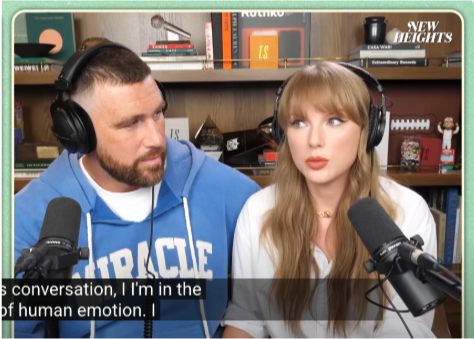
If Taylor’s in the business of human emotion, then consider this the syllabus: 12 Swift-approved lessons in marketing.
Lesson #1: Every Era Needs an Aesthetic
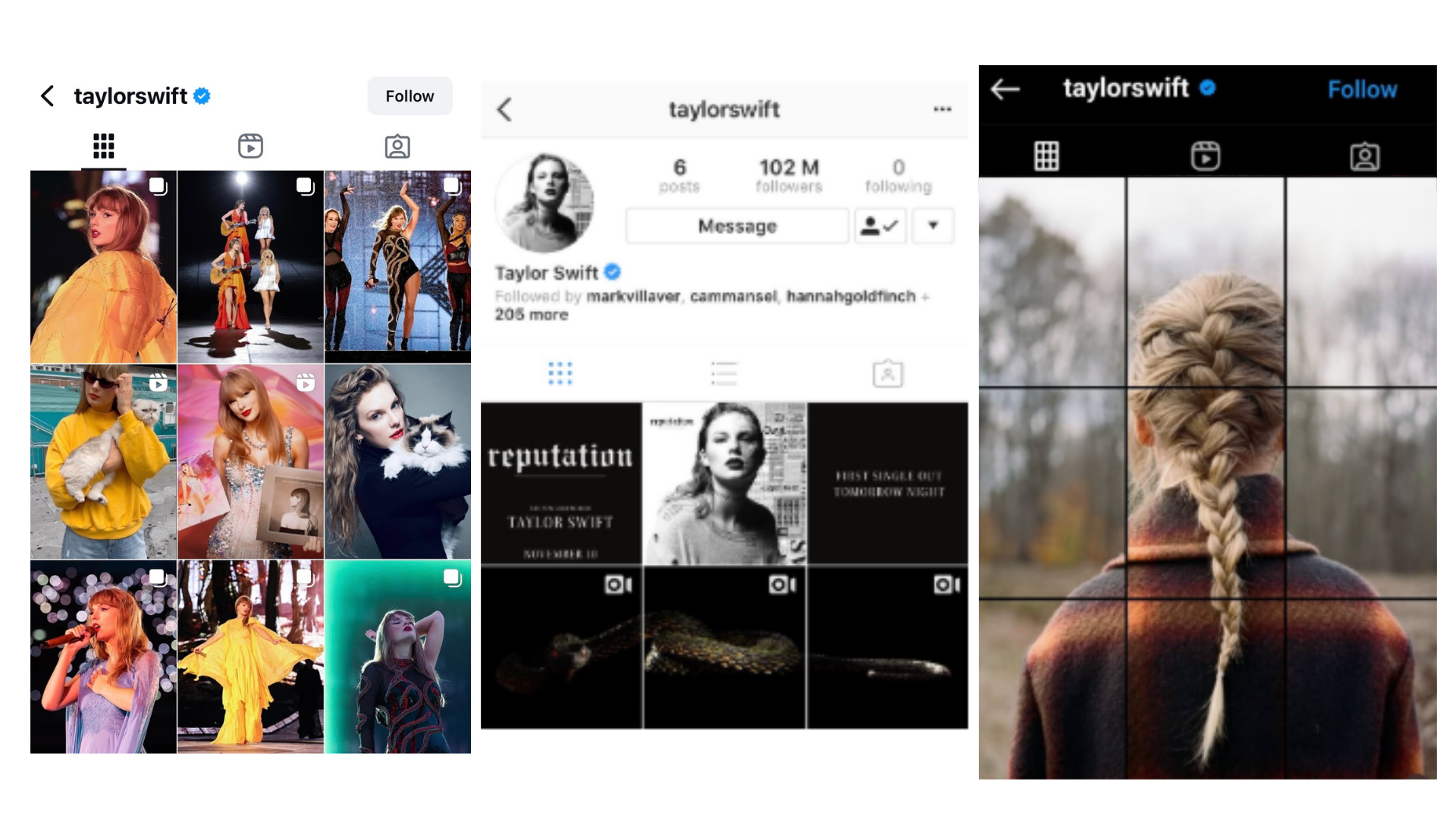
Your grid aesthetic matters, but maybe not in the way you’re thinking. I’m not talking about a perfectly curated feed circa 2013 Instagram. I’m talking about the story your grid tells your audience. The big picture your posts create when someone looks at your profile as a whole, not just one square.
When I try to explain social media strategy to a client, I think about Taylor. There have been times where she archived her entire feed in order to Begin Again. She’s dropped Easter eggs, completely shifted visuals, and used her grid as a storytelling tool. Each Taylor era has its own aesthetic, and she commits to it fully.
The real lesson here is that branding and marketing go hand in hand. Taylor’s consistency across her grid, her website, and her platforms makes her instantly recognizable before anyone even hears the message. That is branding at work, and it is why your marketing actually lands.
Every business needs a brand guide that defines its look, feel, and voice. Marketing then becomes the application of that guide in action. Personally, I love using our grid as a testing ground to showcase different strategies and see how they resonate. Because every brand, like every Taylor era, deserves its own distinctive aesthetic that supports the story you are trying to tell.
Lesson #2: You’re Allowed to Rebrand
In fact, you should rebrand. Your brand and your business are going to evolve just as you do, and just as your audience does. Sticking with the same look, tone, or message forever is not a sign of consistency; it is a sign you might not be keeping up.
Think about Taylor. She has rebranded with every era, not because the old version was not working, but because she had something new to say. Each shift, from Fearless to Reputation to Folklore, brought a fresh aesthetic, a different sound, and a new story that resonated with where her audience was at in that moment.
The same goes for your business. Rebranding does not have to mean burning it all down and starting over. Sometimes it is a refreshed logo, new colors, a stronger tone of voice, or even just tightening up your messaging so it reflects who you are today.
The point is that growth requires change. Rebranding, when done with intention, signals to your audience that you are growing with them.
So instead of asking, “Am I allowed to rebrand?” ask, “What does my next era look like, and how do I bring my brand along with me?”
Lesson #3: Strategy sets the scene for the story
Strategy is not just a buzzword. It is the foundation of every great marketing, advertising, and PR effort. If you are a marketer, you already know this. If you are a business owner who is outsourcing these services, please know this: strategy is everything.
As much as I know, Taylor is a mastermind, even though she is not doing this alone. She has a team behind her, pitching ideas, researching, and mapping out the bigger picture. And honestly, her fans are part of that strategy too, constantly feeding her ideas and engaging with the Easter eggs she leaves behind.
That is what strategy is: research, planning, and then turning all of that into a story that unfolds piece by piece. The big picture gets broken down into small, intentional details that keep the audience hooked.
Think about the Eras Tour setlist. I would love to know the thought process behind narrowing it down. It had to balance Taylor’s personal favorites with fan favorites, all while leaving room for the rotating acoustic set. That level of planning did not happen by chance. It took strategy.
And that is the same with marketing. Too often, people underestimate it because it is a blend of PR, advertising, and creativity. But at its core, marketing is the business of human emotion. Strategy is what turns that emotion into a story that resonates.
Lesson #4: Hide Your Easter Eggs Everywhere
Or in other words, don’t put all your Easter eggs in one basket.
Since her debut album, Taylor has been the queen of Easter eggs. I still wish MySpace existed so I could study how many hints she planted there. Early on, it was the lyric booklets with hidden capital letters spelling out secret messages that only the most dedicated fans would piece together. As her career grew, so did her methods. Suddenly, the Easter eggs weren’t just in lyrics; they were in music videos, social media posts, interviews, and even her website design.
What makes this so powerful is that she never relies on a single channel. She spreads the clues everywhere, which keeps fans engaged across all touchpoints. If you only follow Taylor on Instagram, you will catch some hints, but if you also read her interviews or watch her videos, you will start connecting dots on a bigger scale.
That is the marketing lesson. Do not rely on one post, one platform, or one tactic to tell your story. Spread your “Easter eggs” across your brand ecosystem, from your website and social channels to your emails and in-person experiences. It creates a bigger payoff when your audience realizes the pieces fit together.
Taylor has trained her fans to look closer, to lean in, and to anticipate. Your brand can do the same.
Lesson #5: Anticipation Is a Strategy
Taylor never just announces something; she makes us wait for it. A cryptic caption, a color shift in her outfits, or a subtle lyric drop keeps fans buzzing long before the actual reveal. She understands that anticipation is part of the story.
In business, anticipation builds momentum too. Tease your audience with behind-the-scenes looks, hint at new products, or share clues about what is coming next. You do not have to give it all away at once. By the time you officially launch, your audience already feels invested because they have been along for the buildup.
This lesson is not about Easter eggs for the sake of being clever; it is about letting your audience feel like insiders. And insiders stick around.
Lesson #6: Reinvention is Repurposing with Purpose
Taylor’s Versions are not just re-recordings; they are proof that you can breathe new life into something old by reframing it. That is not just repurposing content; that is strategic reinvention. In business, you do not have to constantly reinvent the wheel. You just have to show people why the wheel still matters today. Refresh a campaign, revisit a blog post with new insights, or repackage a service. Old does not mean irrelevant; it means you have a foundation to build on.
Lesson #7: Business is a classroom…every era is a lesson learned
Every era teaches you something. For Taylor, maybe it was how to navigate fame, deal with critics, or embrace vulnerability. For us as business owners, it might be learning from a campaign that tanked, a client relationship that ended, or a launch that didn’t go as planned.
The trick is not to avoid mistakes, it’s to treat every misstep as a lesson. Taylor has had eras that were praised and eras that were dragged through the mud, but each one shaped the powerhouse she is today. Your brand deserves that same grace to learn, pivot, and grow.
Lesson #8: Your Audience Wants to Be Part of the Story
Taylor’s fandom does not just listen; they participate. Friendship bracelets, surprise-song spreadsheets, decoding Easter eggs… her audience feels like co-authors of her narrative. That is why they are so loyal. In business, engagement is not about chasing likes; it is about inviting people in. Ask questions, let your audience shape your offers, create moments that make them feel like insiders. When your customers see themselves in your story, they stick around.
Lesson #9: Own your narrative
When Taylor lost her master’s, she turned it into one of the most brilliant campaigns of her career. She reframed her narrative before anyone else could define it. That is the takeaway for business owners: your story is the one thing competitors cannot copy.
For brands, this often starts with the founder's story. Why did you create this business? What problem were you trying to solve? What values drive the decisions you make? People connect with people, and your founder story is often the bridge between your brand and your audience.
When you lead with a story, you take control of the narrative and give people something real to connect to. A strong founder story builds trust, creates relatability, and turns your audience into believers, not just buyers.
Lesson #10: You Belong With Me (and My Close Friends List)
Taylor’s Secret Sessions are legendary. A handpicked group of fans was invited into her home to hear an album before anyone else. The exclusivity created massive buzz, but more importantly, it made those fans feel like insiders. They left not only excited about the music but deeply connected to Taylor herself.
You can create the same effect in your business without hosting a living-room listening party. Instagram’s Close Friends feature is one way to give your audience VIP treatment with early access, sneak peeks, or behind-the-scenes content. Email marketing is another powerful tool for this. A segmented “insiders list” can get first dibs on new products, bonus resources, or special offers. Both channels say the same thing: “You’re part of the inner circle.”
Exclusivity is not about shutting people out; it is about pulling the right people in. When your audience feels chosen, they feel invested, and that creates loyalty, advocacy, and organic buzz.
Lesson #11: Nostalgia Marketing Hits Different
Taylor has managed to resonate with multiple generations, and I believe that’s because a) she is able to tap into universal human emotions (see lesson #12) and b) she understands the power of nostalgia marketing. Think about it… Love Story can transport a millennial straight back to prom, while Enchanted (Taylor’s Version) makes Gen Z feel like they’re starring in their own coming-of-age movie. She creates music that connects in the moment but also ages into memory.
As marketers and business owners, that’s the key: nostalgia isn’t just about “throwback posts” or retro aesthetics, it’s about reminding people of who they were when they first fell in love with your brand. Maybe it’s re-releasing a bestselling product in updated packaging, bringing back a fan-favorite flavor, or simply telling stories that celebrate your brand’s history. Nostalgia marketing works because it ties present experiences to past emotions, giving your audience that same “I remember where I was when…” feeling Taylor delivers every time she re-releases a song.
Lesson #12: At the end of the day, Marketing is really just the business of human emotion
At the end of the day, marketing is not about algorithms, ad spend, or even perfectly crafted campaigns. It is about how you make people feel. Taylor has built a two-decade career not just because she writes catchy songs, but because she writes our stories. She taps into heartbreak, joy, nostalgia, and hope, and then reflects those feelings back to us through her music. That is why fans cry in stadiums and scream every lyric like it belongs to them…because it does.
Your business has the same opportunity. Whether you are selling jewelry, coaching, or design services, your audience is not buying the product alone. They are buying the feeling your product or service gives them. Maybe it is confidence, maybe it is peace of mind, maybe it is the joy of feeling seen. When you tap into that emotional core, you stop selling and start connecting.
So here is your final Swift-inspired syllabus note: do not just market to be heard, market to be felt. When you connect with human emotion, you are not just building customers, you are building a community that will follow you through every era.